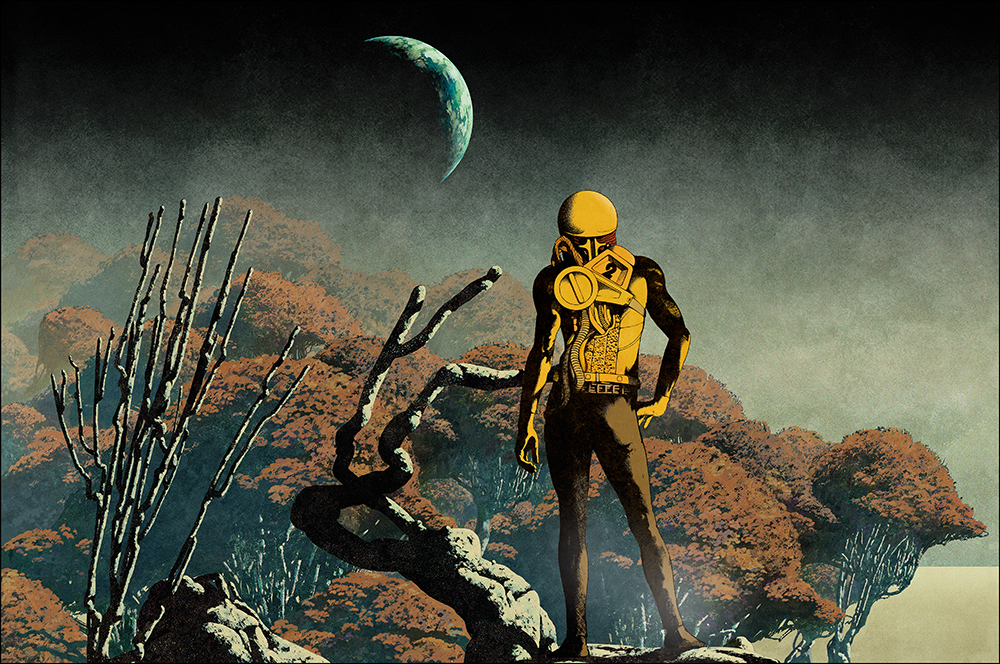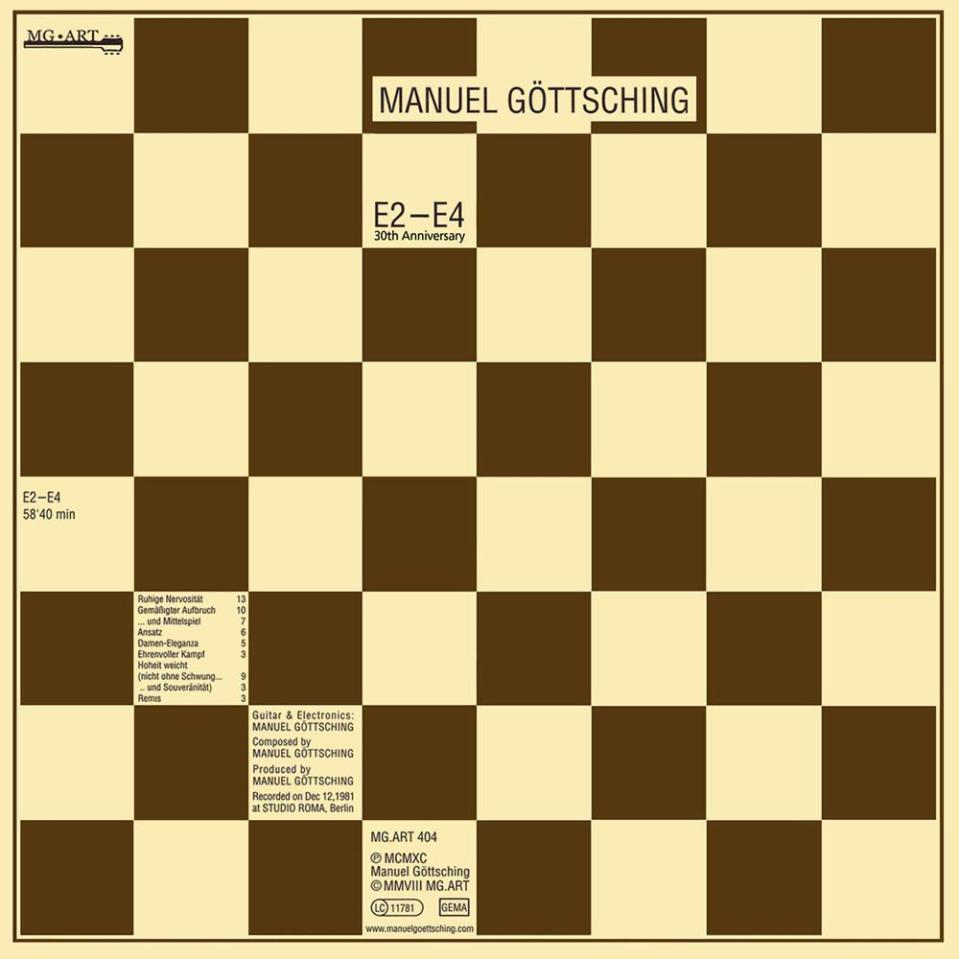
Manuel Göttsching – E2-E4

“When I played it back I thought, ‘This is OK actually, maybe I should release it.’ All the technical aspects of the recording were just right, too, not a single fault. I didn’t have to change anything. It was perfect.”

-Manuel Göttsching

Anyone who has ever picked up an instrument and spent time improvising, either by themselves or with additional musicians, will know of the feeling when a particular session comes together in a way as to feel complete—the feeling that the creative motor fires on all cylinders, and the physical execution rises to meet it. It’s what all musicians strive for: the convergence of skill and taste.

And hallelujah for the times the recorder was running! In the case of Manuel Göttsching’s E2-E4, not only was it running and set up to capture the session, but in a premonition-like stroke of luck, Göttsching proceeded as if he were to officially record a studio session.

Hindsight is 20/20 as they say, and how many times has a musician—at the end of a particularly sparkling session—exclaimed, “oh if we had just recorded that!”? To Göttsching’s surprise, and our good fortune, he did!

Prior to and during the time of the recording, Göttsching was captivated by compositions by prominent minimalists, such as Terry Riley and Steve Reich. His own work in Ashra (Ash Ra Temple) had grown progressively more electronic, incorporating loopers and synthesizers. He pushed Ashra, which by now was more a solo act than a group, from its early krautrock/progressive leanings into the forefront of electronic music.

Ever the guitarist, however, he began layering his guitar over the top of slowly morphing synths and gently-looped beats, and albums such as New Age of Earth, Blackouts, and Correlations would feature looped, treated guitar. This would continue to be his MO through much of the mid- to late-70s, leading up to the recording of E2-E4, when he began to experiment more with drum machines, sequencers, and synths.

The story, according to Göttsching, is that he wanted to record some music to listen to during a flight he was taking the next day. The result was a one take, hour-long piece whose foundation was a repeating synth riff over which he added some rolling electronic high hat and light, steady bass thumps. The centerpiece of the work—some lovely improvised guitar—enters the mix around the halfway point.

The album functions well as either background music or, arguably more so, when the listener is actively listening. It shines brightest through headphones and especially if said headphones are of higher quality and driven by decent audiophile equipment. That’s not to say you have to have higher-end equipment to enjoy the album. Its ability to grab the listener and take them in is mostly due to the structure of the piece itself, rather than the production quality.

Repetition is key here. It lends a stability to the piece that grounds it while at the same time allows it to transfix the listener. While it does on one hand somewhat point to the fact that this album was recorded spontaneously, it doesn’t come off as an unintended result due to the brevity of recording, or as the limitation of one man being at the helm. At many points, it keeps the piece from spiraling out from itself.

Take for example around the 47 minute mark. Göttsching’s guitar playing here has intensified, and begins to spread out. You can feel him pushing himself to let loose and fully explore how far he can take it within the confines of the song. It’s at this moment where his guitar comes as close to frenzied as it will within the piece. He feels like he’s getting ready to take off.

It is the foundation of the sequenced synths that keeps him in check. The interplay between this steady, structured base and the reaching, escaping guitar creates a beautifully strained and dichotomous pairing. It’s the climax of the album and it’s hard to resist bobbing your head along to it.

Göttsching has said that he didn’t immediately know what to do with this album after he had created it. He played it for Virgin managing director, Simon Draper, who liked it and referred Göttsching to Virgin Group founder, Richard Branson. He also liked it. Yet because of Göttsching’s reluctance to release it on Virgin to avoid it getting lost in a sea of mainstream releases now regularly coming through the label, it sat on the shelf until 1984.

He finally released it as E2-E4, a nod to both chess and R2-D2 (whose technical-sounding name he appreciated), on the smaller Inteam label. Its first run was 1,000 copies. The reception was modest, and it quickly faded into cult status.

It has maintained an influence, however, on electronic artists since its release. And while it’s certainly not widely known outside of the music industry and electronic music aficionados, it is undoubtedly considered a work of high achievement to those in the know. It is lightning in a bottle, or more precisely, on tape.

You can purchase E2-E4 at the official Ashra shop here.

RIP Scott Walker

Scott Walker, member of the 1960s supergroup The Walker Brothers, and enigmatic solo artist has passed away this last Friday, aged 76.

Walker, born Noel Scott Engel, first shot to fame in the 1960s performing inspired interpretations of others’ songs as member of The Walker Brothers. He was a reluctant teen heartthrob, who eventually walked away from it to start his own solo career when his own songwriting skills began to develop.

I won’t add to the already crowded discourse of people saying how incredibly important he was to music, fans, and musicians.

I’ll just say that personally I’ve admired his late-career courage and have considered him an example of true musical artistry.

Please feel free to raise a drink with me and listen to the compilation I’ve put together in Spotify.

“No regrets.”

Franco Nanni – Elicoide

Released in limited quantities in 1987, Elicoide is a beautiful example of minimalism in the tradition of Philip Glass, Steve Reich, John Cage, or Daniel Lentz, but with synths. It was recorded live in a single take by Nanni, contrabassist Paolo Grandi, Leonardo Croatto, and Marcela Pérez Silva.

The album is built around evolving repeating notes from a series of synths: SCI’s Prophet 5 & Sixtrak, Yamaha DX7 & TX7, and Roland JX8P. Nanni’s intention was to create a trance-like effect from the repetition and slow, subtle shift in changes with the notes themselves. Thus, the pieces immerse the active listener in an environment where tonalities and beats change on a seemingly microscopic level, but still progress the compositions themselves.

Nanni eventually gave up playing music in the 1990s and concentrated on his studies, which included biology and sociobiology. Recently, Elicoide has been repressed on Affordable Inner Space in 2017. Copies of which have since sold out.

You can stream Elicoide on Bandcamp here.

Syd Mead

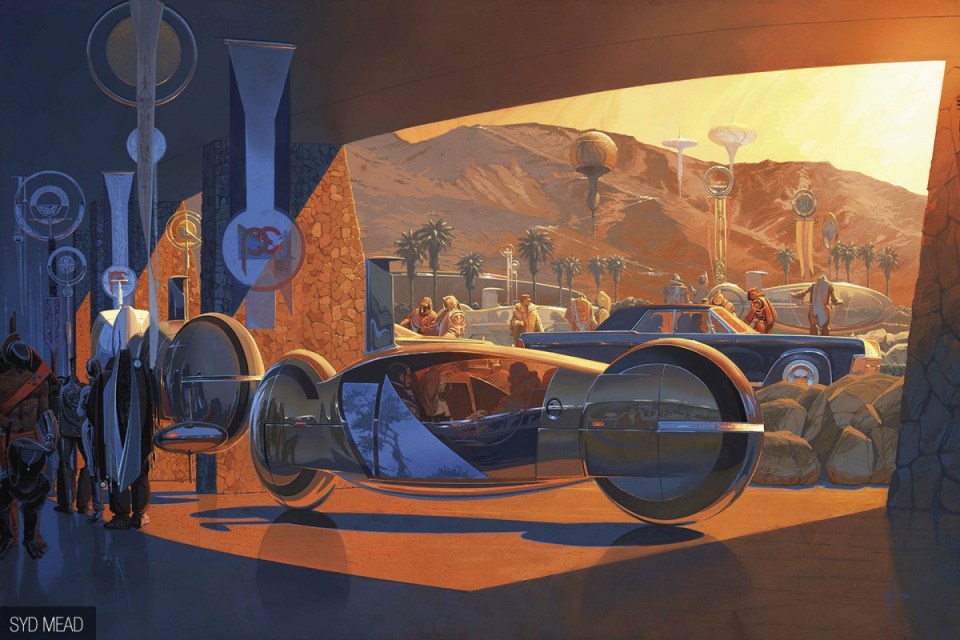
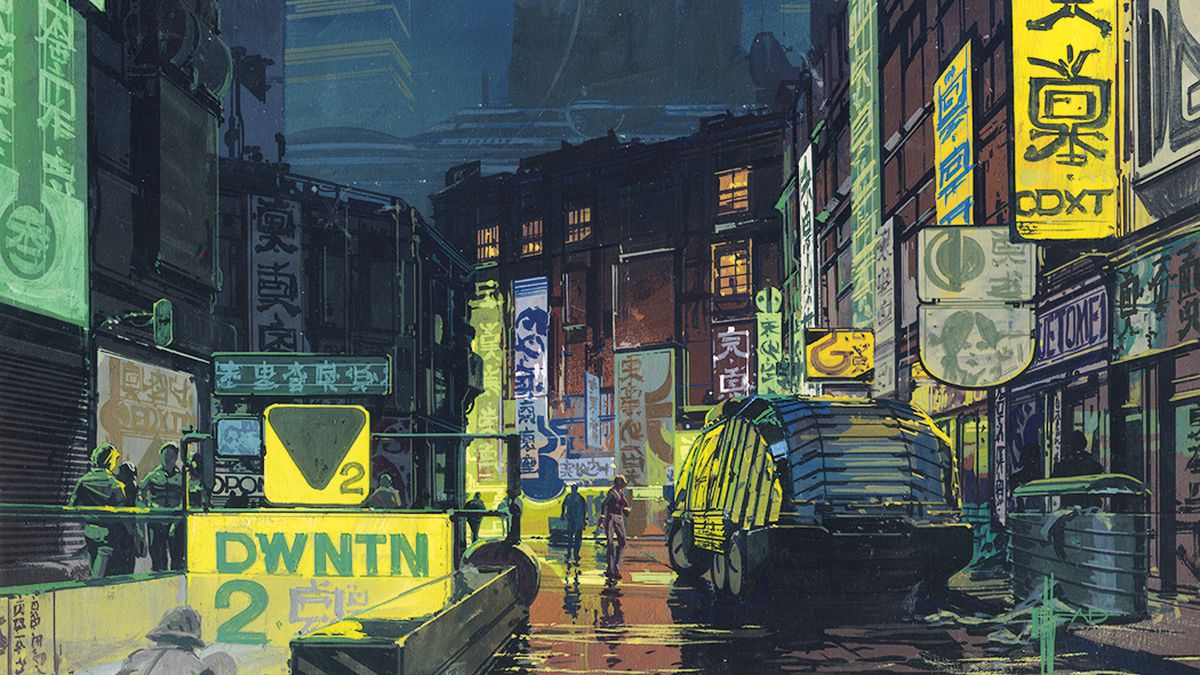
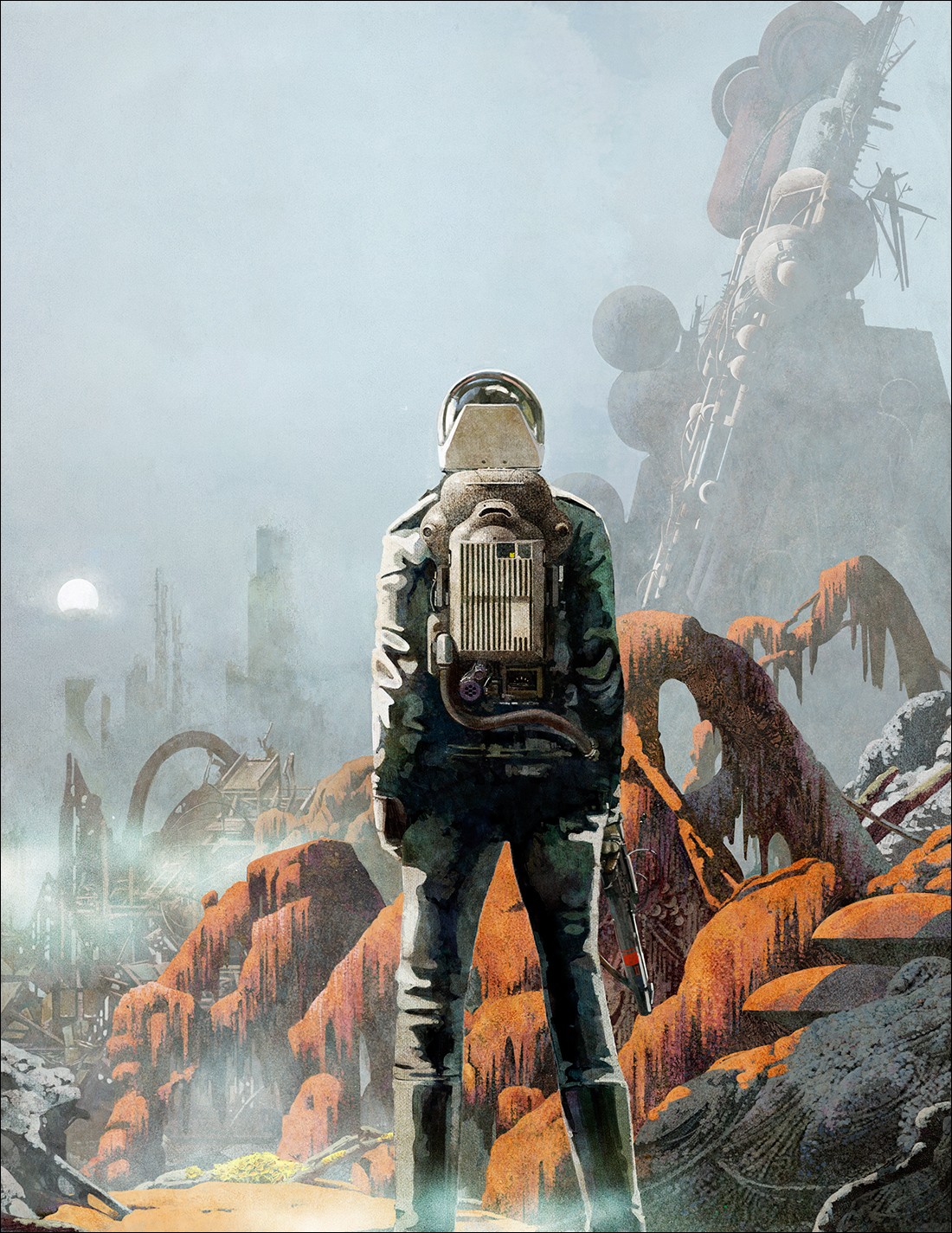
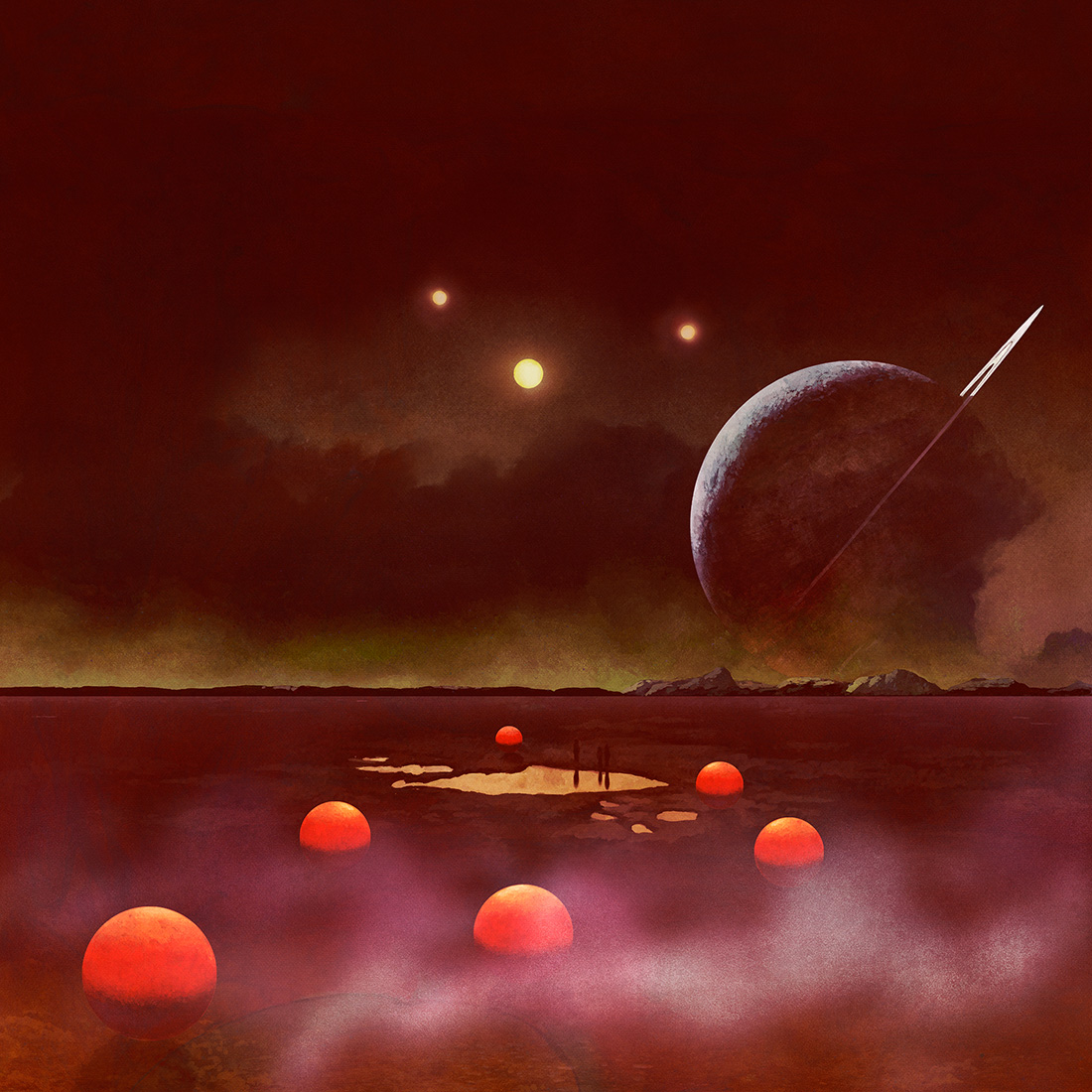
To anyone interested in science fiction art and design, Syd Mead will already be well-known. The list of films he’s worked on is intimidating, from Star Trek: The Motion Picture, Blade Runner, TRON, Short Circuit, Aliens, Time Cop, Mission Impossible 3, to Elysium.

He’s worked with numerous companies both abroad and domestic, including Sony, Minolta, United State Steel, Honda, Bandai, and Philips.

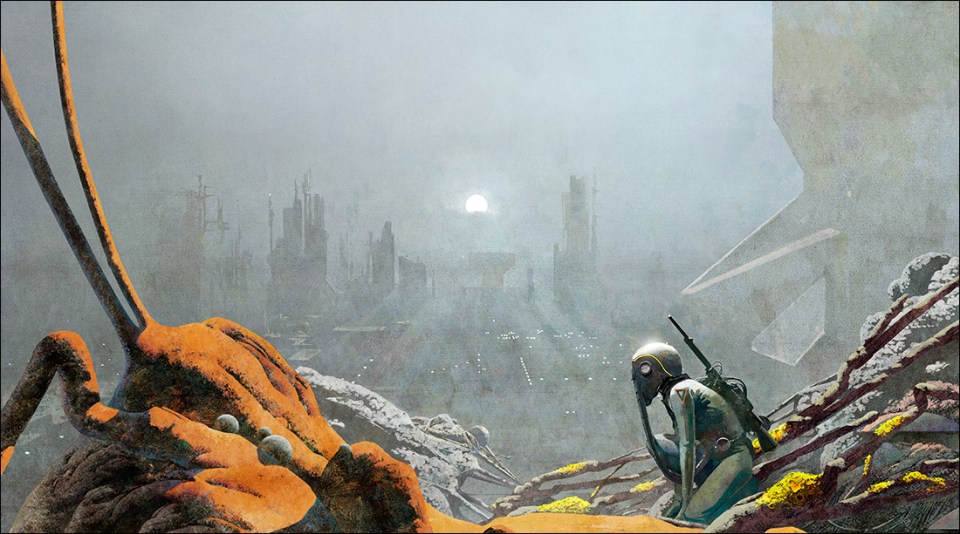
My absolute favorite pieces of his deal with some form of transportation or cityscape. He’s adapt at rendering both the idealistic, utopian future, and the post-apocalypse, deteriorated future. In both, the machines stand as a mark of the ingenuity and accomplishments of man.

The centering of the machines in his utopian work leads to a sense that these societies are driven by the sole success of manufacturing and industry, and more specifically, of the transportation industry. It places the machine on the pedestal and grants it status as man’s greatest achievement. It is a symbiotic relationship, but one in which the success of one clearly defines the success of the other.

In his darker visions of the future, the machine’s existence within its broken-down environment, many times shrouded by other discarded bits of failed industry, stands as a symbol of the past might of societal inventiveness. In these portraits of decaying urban life, the machine most often remains elegant, regardless of visible wear and tear. It is a sign of what was once great—a reminder of the possibilities within an impossible world.

Spinner from Blade Runner

Mead is also a master at designing things that at once feel both a part of the real world and of another. His best work functions to excite the possibilities while at the same time display something that can’t exist. One of my favorite––and one of his most iconic––designs is the Spinner from Blade Runner. With its projected wheels, large cockpit, and smooth back, it is a design that is both impossible yet understated and practical.

In a sense, this stems from a desire inherent in futuristic art to produce something the viewer hasn’t seen before. The tendency is to create things that therefore can’t exist. However, Mead’s creations never seem unnecessarily out of place within their confines. In as much as the machines are the focus of the pieces, the surrounding environment’s function is to either advance the believability of the machine’s existence, or to paint a contrast to it.

These are just a few ways in which his images work. He’s a master at presenting new and exciting ideas, but by using real-life touchstones to do so. There is a tangible quality to his work without grounding it in total reality. In short, he creates dreams—always connected to reality, but never totally bound by it.

Dan McPharlin

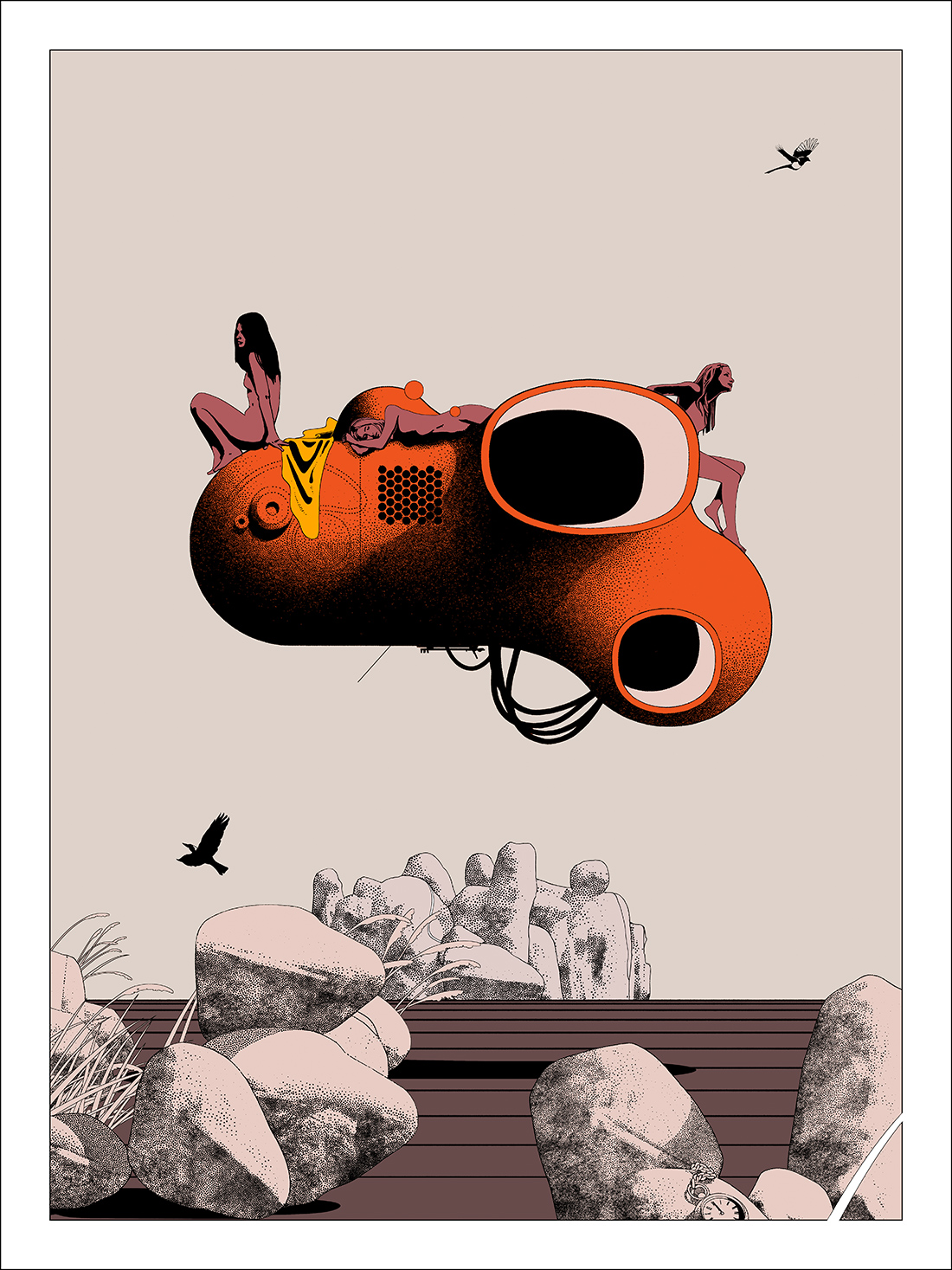
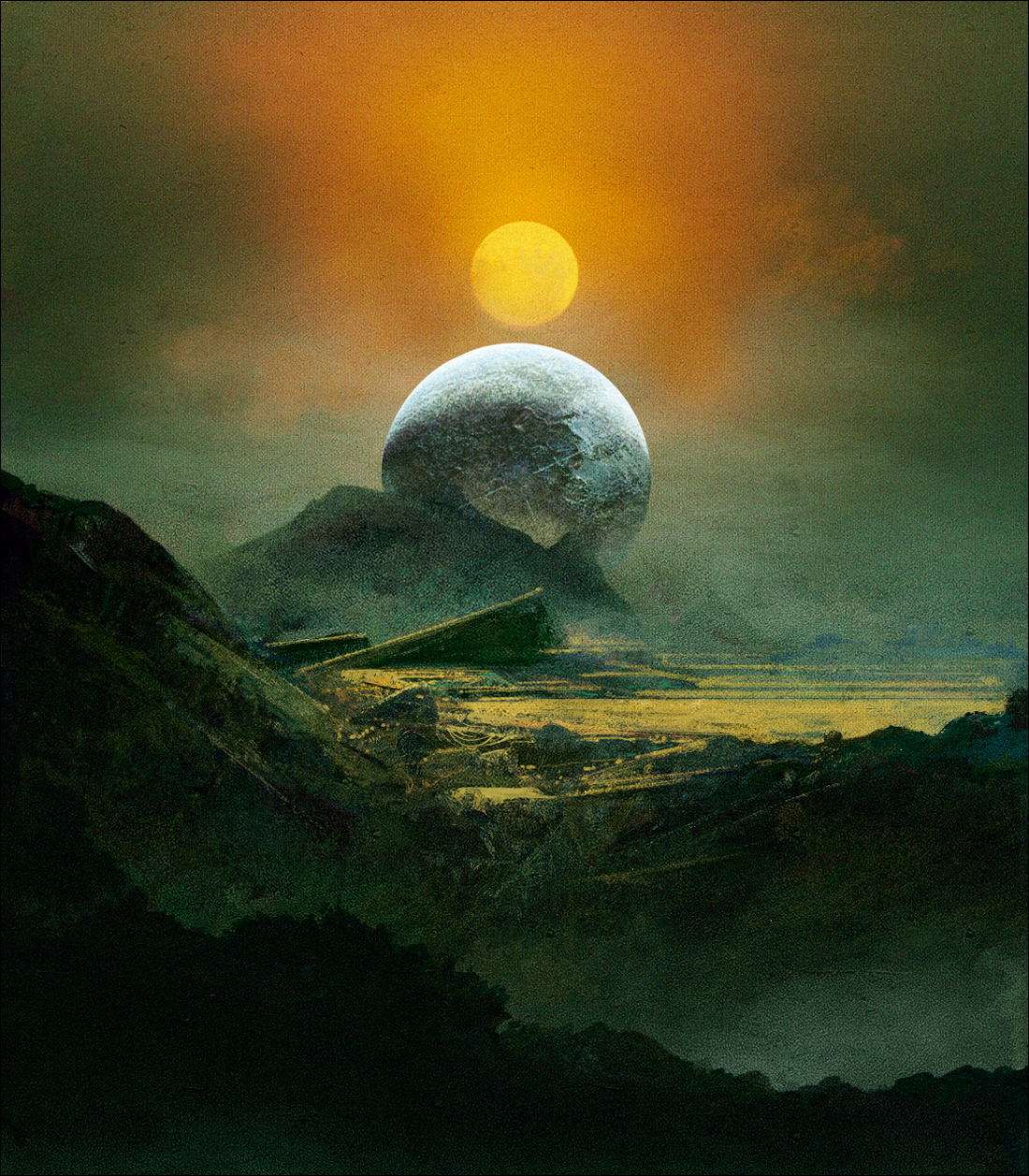
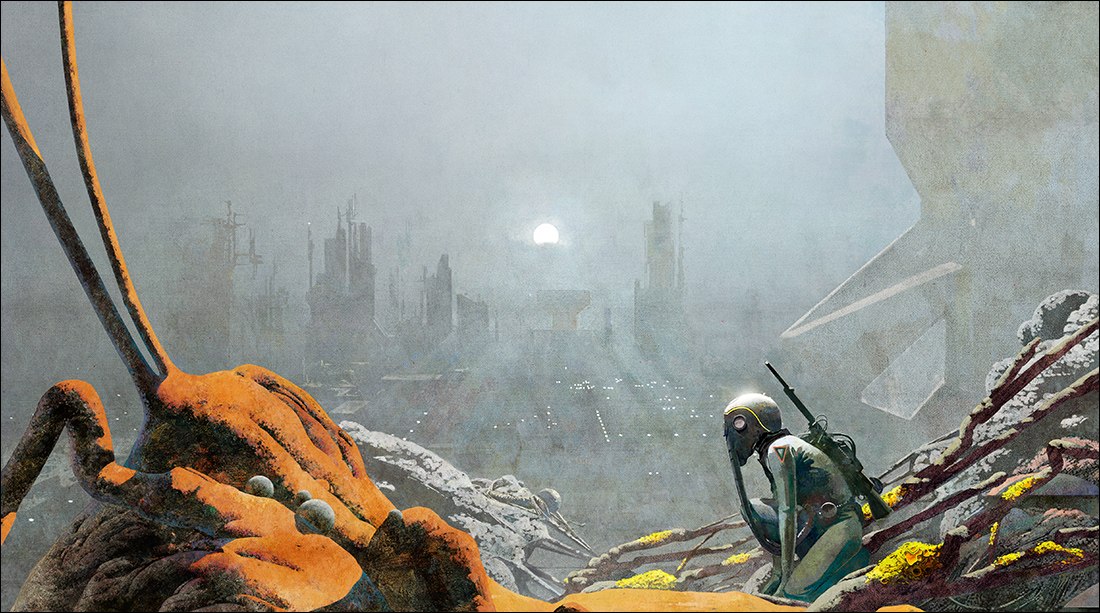
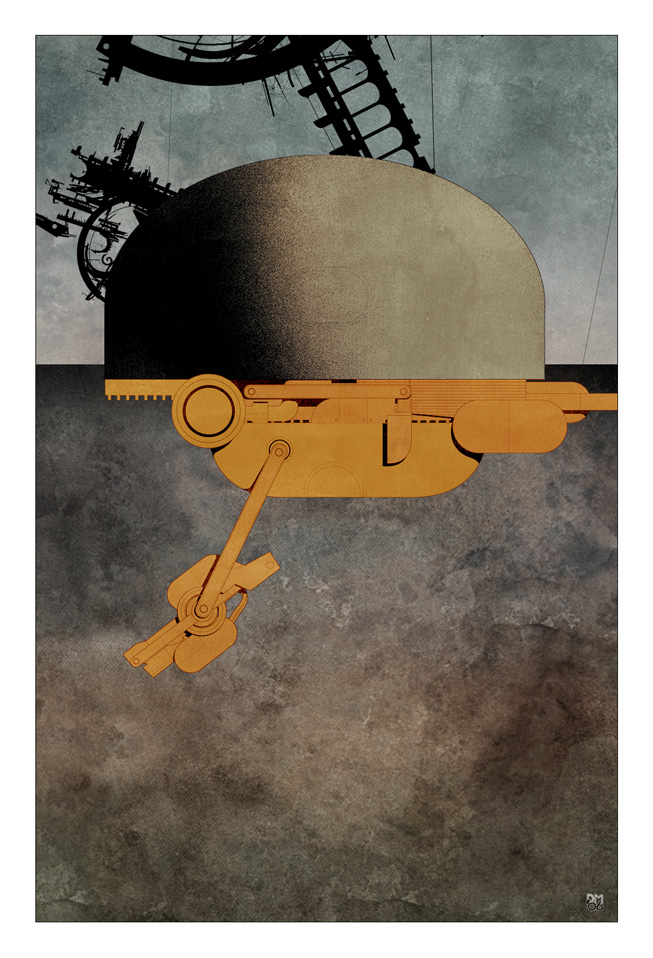
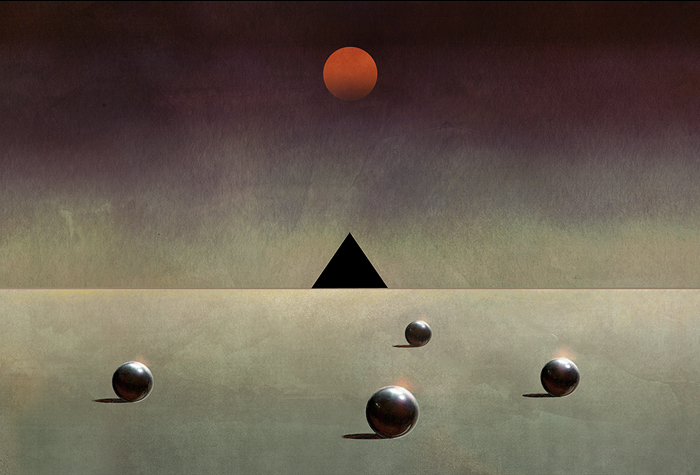
I stumbled across Australian artist Dan McPharlin a few years ago on the site http://www.sci-fi-o-rama.com/ and was intrigued by the juxtaposition in his work. Displaying themes of man-made vs nature, structured and unstructured, natural vs unnatural, and ridged vs supple, his art goes beyond mere sci-fi gimmicks. He operates quite successfully across multiple approaches including minimalism, miniatures, photography, and even music.

Chapter 18 by Dan McPharlin

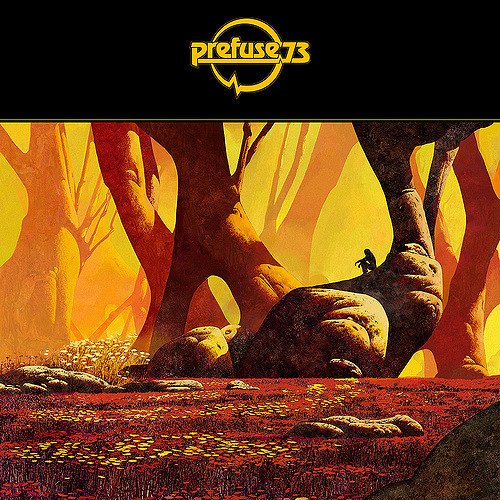
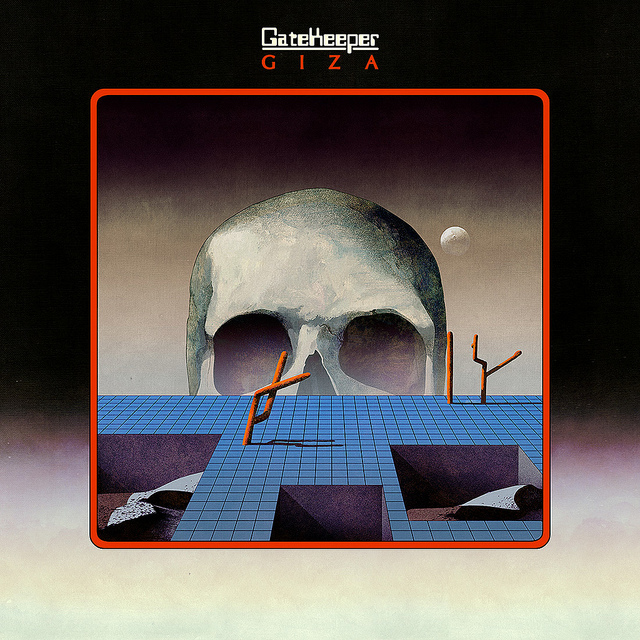
McPharlin’s artwork has appeared on album covers for bands such as Pretty Lights, Prefuse 73, Gatekeeper, and Dylan Ettinger. His work has been featured in magazines such as Wired, Esquire, and The New York Times.

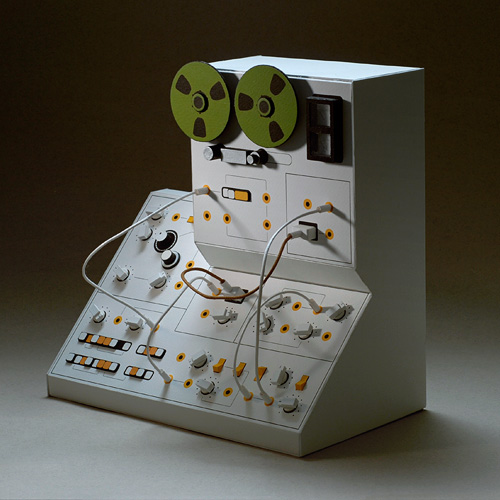
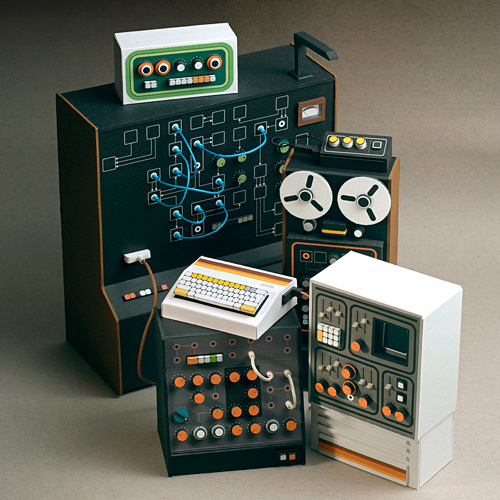
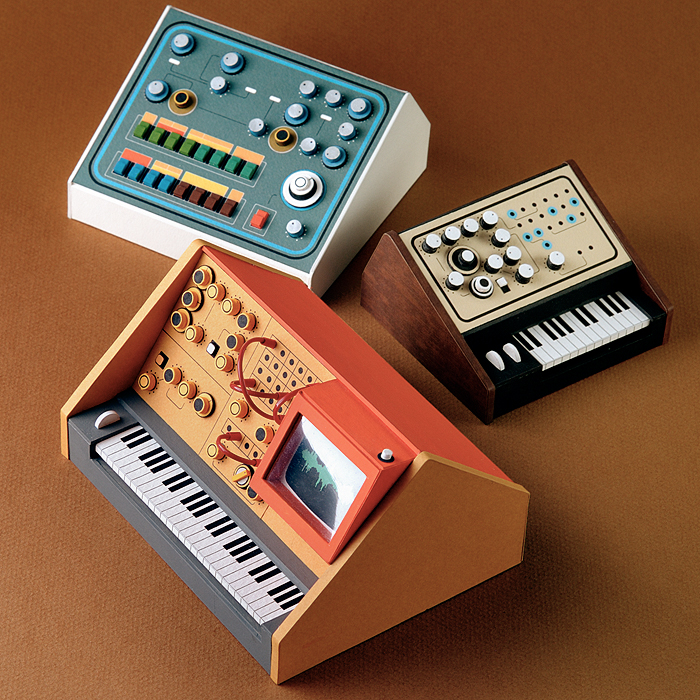
In addition to the geometrical minimalism as highlighted in Chapter 18 above, he has created some wonderful miniatures of synths and analog equipment, original LEGO creations, and other models. You can find more examples of his amazing work at https://www.flickr.com/photos/danmcp and http://danmcpharlin.net/.

To hear an ambient mix that McPharlin created to go along with his work, Transmission 2, go here https://soundcloud.com/cosmonostro/dan-mcpharlin-transmission-2.

Here’s a selection of some of his “Analogue Miniatures.”

For all of the imagery and content he’s published, McPharlin is a pretty reclusive character, and what’s available about him on the internet is pretty sparse. Additionally, any original work beyond 2010 is difficult to find, or non-existent, yet I could find no explanation for his disappearance.

Needless to say, it’s an odd thing for someone who was so productive and present from 2002-2014 to fall off the map (at least the cyber map). Here’s hoping that Dan is ok and gearing up for a return to creating the beautiful things he can create. Until then, we can always continue to appreciate his back catalog.

Mariah – Utakata No Hibi

The long-running project of saxophonist Yasuaki Shimizu, this album represents in most listeners’ opinions (and mine) the pinnacle of his craftsmanship and the height of Mariah’s artistic endeavors. Each track here still feels fresh, as though it was recorded yesterday. This has much to do with the team of musicians Shimizu had surrounded himself with.

Originally begun as a hard rock/prog rock outfit, Mariah’s music focused on jazz interludes strung together with prototypical 1980s rock and pop. The music varied quite a bit from the harder rocking “Marginal Love” to the progressive leaning “Black Mariah.” Prior to Utakata, they had released three albums, Mariah, Yen Tricks, and Marginal Love. However, the advancement of originality on Utakata is unparalleled in the band’s history.

Shimizu went back to the drawing board after the lead singer, Satoshi Jimmy Murakami left the band. The approach became more organic––more natural. The band incorporated people they were already hanging out with at the Mariah offices. The artwork was produced by the manga artist and friend of Shimizu’s, Yla Okudaira, who worked out of Mariah’s office.

Another vital addition, according to Shimizu in a recent interview, was the addition of Aki Ikuta as co-producer. Until Utakata No Hibi, Ikuta mainly focused on management and “playing in and coordinating jazz sessions.”

He invited artist and wife of Mariah bassist Morio Watanabe, Seta Evanian, to write Armenian lyrics for various songs on the album. These were sung by her friend and visual artist, Julie Fowell, and as Shimizu recalled in an interview with Red Bull Music Academy, “I remember the inspiration that flowed through me when we were collaborating, the feeling of an eternal breeze brushing your cheek.”

The music itself exemplifies this breeziness. It flows effortlessly and from a place of great passion. The incorporation of such seemingly disparate genres as jazz, Armenian, Asian, African, pop, disco, and new wave among others, so fluidly and with so few missteps is a testament to the openness of the recording sessions and the creative process.

“Hana Ga Saitara” bounces along, boosted by electronic burbles, yelps of saxophone, lively bass, and group vocals that at one point are spoken through what sounds like a megaphone. The effect is at once a feeling both recognizable yet completely unique.

The standout piece, “Shinzo No Tobira,” leans heavily on echoed drums, thumping bass, synth-pop keys, and gorgeous, off-kilter vocals by Fowell.

Utakata would sadly be the last record released by Mariah. The band went their separate ways shortly after its release. It’s hard to say where their music would have gone after this album––if it’s even possible to expand on such a sound as was already presented here. Shimizu, for his part, would go on to create numerous fantastic solo records, not in the least Kakashi.
However, regardless of the finality of Mariah, there is so much to mine here that after hundreds of listens, I’m still finding new phrases, new sounds, new images I hadn’t heard before. That is the beauty of this record. And that they accomplished this with such seemingly casualness only adds to its status as a hidden gem of the 1980s.
You can purchase the vinyl reissue at Palto Flats